



Daytime running light systems have changed modern road safety forever. These steady lights stay on while you drive during the day. They do not help the driver see the road better. Instead, they help other people see your vehicle much more clearly.
Increased visibility reduces the risk of head-on collisions significantly. Many countries now require a daytime running light on every new vehicle sold. This article explores why these lights matter for your safety and your car’s style.
Why Every Vehicle Needs a Daytime Running Light
The primary goal of a day time running light is simple visibility. Sunlight can often create harsh glares or deep shadows on the asphalt. A moving car can blend into the background during these high-contrast moments.
Enhancing Road Safety
Research shows that dedicated lighting reduces daytime accidents by nearly 10 percent. Pedestrians and cyclists can spot a day time running light from much further away. This extra time allows others to react to your vehicle’s presence.
Improving Vehicle Recognition
On a two-lane highway, judging distance is very difficult. A bright day time running light helps oncoming traffic estimate your closing speed. Consequently, drivers make safer passing decisions when they see you coming.
The Evolution of Daytime Running Light Design
In the past, car makers used dimmed high beams for this purpose. This older day time running light style often looked yellow and consumed too much power. Modern technology has moved toward much more efficient solutions.
The Rise of LED Technology
Most modern cars now feature LED daytime running light strips. These LEDs use very little electricity compared to traditional halogen bulbs. Furthermore, they last much longer than the lifetime of the vehicle itself.
Signature Styling Elements
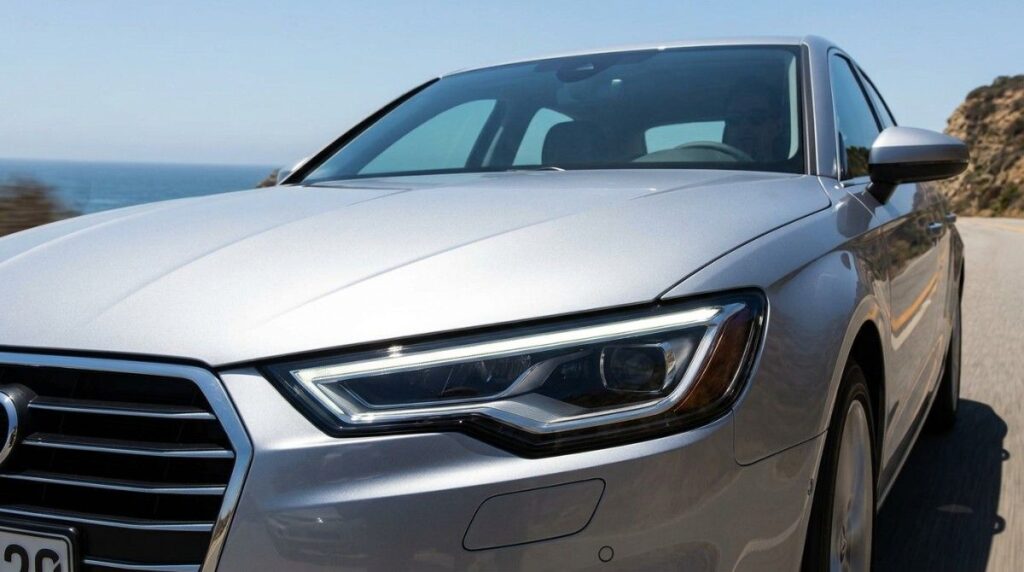
Designers use the day time running light to create a unique brand “face.” You can often identify a luxury car just by its specific light pattern. This blend of safety and aesthetics is now a major selling point.
How a Daytime Running Light Differs from Headlights
Many drivers confuse their main headlights with a day time running light. However, these two systems serve very different purposes. Understanding the distinction is vital for proper vehicle operation.
Beam Pattern and Intensity
A day time running light is designed to be seen, not to illuminate. The beam is spread widely to catch the eyes of others. Conversely, headlights focus a beam downward to light up the path ahead.
Automatic Operation Features
Most vehicles turn on the daytime running light as soon as the engine starts. You do not need to flip a switch to activate them. They usually dim or turn off when the main headlights are engaged.
Legal Requirements and Global Standards
The laws regarding daytime running lights vary depending on where you live. Some regions were much faster to adopt these safety standards than others.
European Union Regulations
The EU mandated a day time running light for all new cars in 2011. This move aimed to lower the high rate of multi-vehicle accidents. Since then, road fatalities have dropped across many member states.
North American Standards
In Canada, a day time running light has been mandatory since 1989. The United States allows them, but does not strictly require them yet. However, most manufacturers include them to simplify their production lines.
Maintenance for Your Daytime Running Light System
While LED systems are durable, they are not completely invincible. You should check your day time running light regularly to ensure it functions. A dead light can make your car look lopsided and less visible.
Checking for Lens Oxidation
Plastic covers can become cloudy over several years of sun exposure. A cloudy lens reduces the effectiveness of your day time running light. You can use a restoration kit to bring back the original clarity.
Replacing Faulty Modules
If an LED daytime running light fails, you might need a new module. These repairs are usually more expensive than swapping a simple bulb. Always consult a professional for electrical issues in modern cars.
The Future of Daytime Running Light Innovation
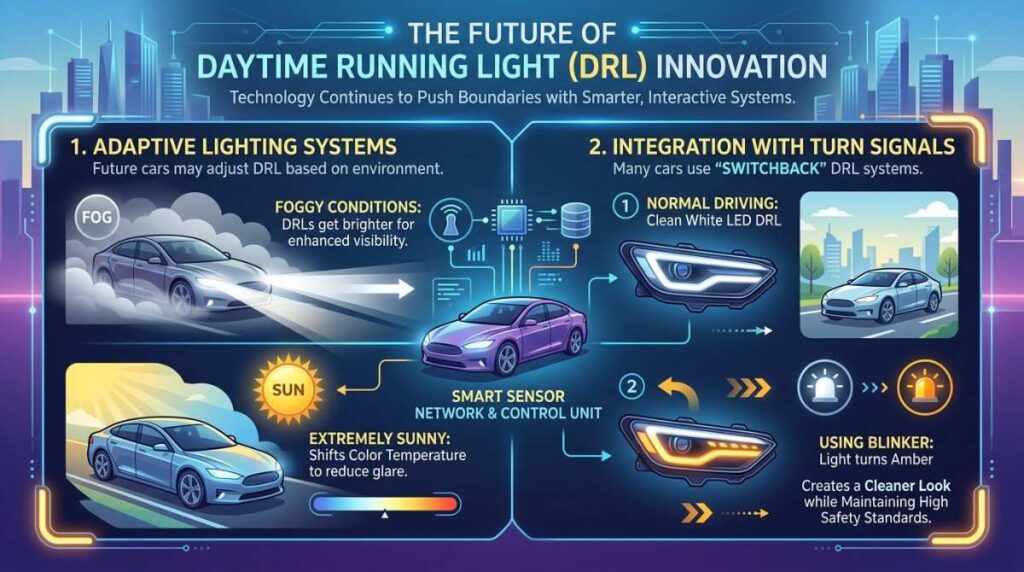
Technology continues to push the boundaries of what a day time running light can do. We are seeing smarter systems that interact with the environment.
Adaptive Lighting Systems
Future cars may adjust the daytime running light brightness based on the weather. If it is foggy, the lights might get brighter. If it is extremely sunny, they might shift their color temperature.
Integration with Turn Signals
Many cars now use a “switchback” day time running light. This light turns amber when you use your blinker. This integration creates a cleaner look while maintaining high safety standards.
Top Universal Daytime Running Light Kits
If you want to add a daytime running light to an older car, these universal kits are the best choice. They offer great visibility and easy installation.
- Philips LED DayLight Guide: This is a premium choice for safety-conscious drivers. It uses high-power LUXEON LEDs for a very uniform light beam. The “simple-click” system makes it easy to mount on most bumpers. It even dims at night to avoid blinding others.
- OSRAM LED Driving LG: This kit is known for its sleek, ultra-compact design. It is fully waterproof and resistant to gravel impacts. It works perfectly with hybrid vehicles and cars with start-stop engines.
- HELLA LEDayLine: These are high-end bars that offer a classic, luxury look. They are extremely bright and meet all international safety standards.
Performance Bulb Replacements
Many drivers prefer to replace their existing halogen bulbs with a high-performance daytime running light LED. This is a very quick “plug-and-play” upgrade.
Best for Longevity: GTR Lighting Ultra 3
The GTR Lighting Ultra 3 is currently rated as a top choice for 2026. It features an aluminum housing with thermal fins to stay cool. These bulbs are designed to outlast the vehicle in which they are installed.
Best for Compatibility: Morimoto 2Stroke 4.0
Some cars flicker when you install LED bulbs for a day time running light. The Morimoto 2Stroke 4.0 is engineered to prevent this specific problem. It works with almost any vehicle electrical system without needing extra decoders.
Vehicle-Specific DRL Upgrades
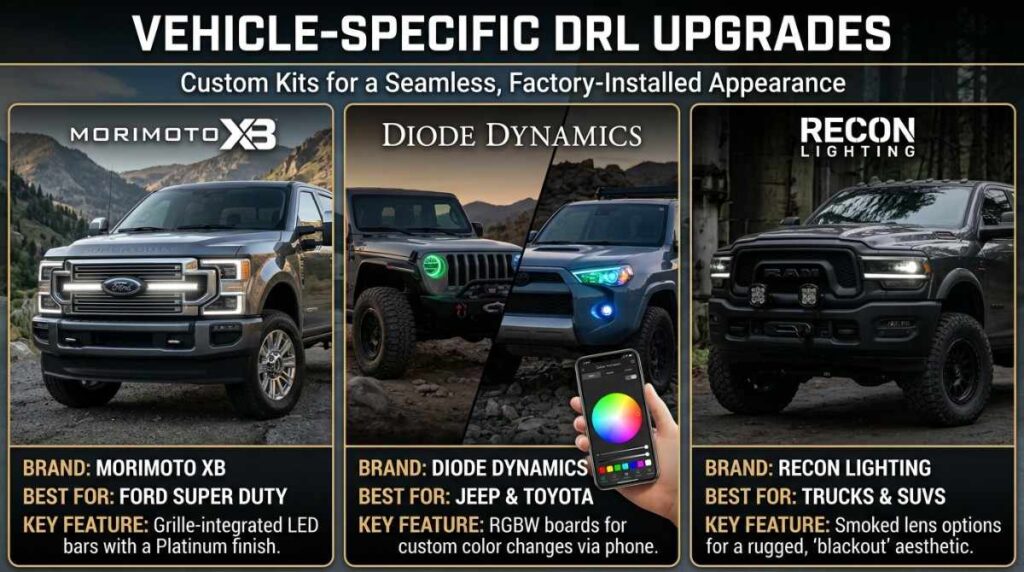
For truck and SUV owners, custom kits provide a seamless, factory-installed appearance. These often integrate into the grille or headlights.
| Brand | Best For | Key Feature |
| Morimoto XBG | Ford Super Duty | Grille-integrated LED bars with a Platinum finish. |
| Diode Dynamics | Jeep & Toyota | RGBW boards that allow for custom color changes via phone. |
| RECON Lighting | Trucks & SUVs | Smoked lens options for a rugged, “blackout” aesthetic. |
Choosing the Right Kit for You
Before buying a day time running lights kit, check your local laws. Some regions require specific “E-mark” or DOT certifications for road legality. High-quality brands like Philips and OSRAM usually include these certifications.
Frequently Asked Questions
Can I turn off my daytime running light?
In most modern cars, you cannot easily disable them while driving. They are safety features designed to remain active automatically. Some cars allow it through a menu, but it is not recommended.
Does a daytime running light drain my battery?
No, these lights draw a very small amount of current. The alternator easily handles the load while the engine is running. You should not worry about battery drain during normal use.
Are they the same as fog lights?
No, fog lights are mounted lower and used for specific weather. A day time running light sits higher and stays on in clear weather. Do not use fog lights as a replacement.
Can I add a daytime running light to an old car?
Yes, many aftermarket kits are available for older vehicles. You can install LED strips that wire directly into your ignition. This is a great way to modernize an older vehicle.
