



As electric vehicles (EVs) continue to gain popularity, the need for efficient charging solutions has become increasingly important. Enter electric vehicle smart charging, an innovative approach that optimizes the way EVs are charged. Smart charging goes beyond simply plugging in your car; it involves intelligently managing when, where, and how much energy is delivered to your vehicle. This ensures that EV charging is not only more convenient but also more cost-effective and sustainable.
In this comprehensive article, we will explore smart charging vehicles, their benefits, challenges, and how it is shaping the future of transportation. We’ll also discuss the technology behind smart charging, its environmental impact, and how it contributes to energy grid stability.
What is Electric Vehicle Smart Charging?
Electric vehicle charging refers to the process of intelligently controlling EV charging based on factors such as electricity demand, grid capacity, and energy prices. Instead of charging your vehicle at any given moment, smart charging electric vehicles allows the system to schedule charging during off-peak hours or when renewable energy sources are more abundant. This not only reduces energy costs but also minimizes the strain on the grid, promoting sustainability.
By using advanced software and communication between the EV, charger, and energy provider, smart charging ensures that EVs receive the most efficient and environmentally friendly power possible. This seamless integration between technology and energy systems is at the core of vehicle smart charging.
How Does Smart Charging Work?
Smart charging works by monitoring the electricity grid, energy demand, and the charging needs of EV owners. It uses real-time data to determine the best times to charge your electric vehicle. The system is often connected to a smart charger, which communicates with your car and the grid. The charger can automatically adjust the charging speed and timing to optimize efficiency.
For example, if you plug your vehicle in during peak demand hours, the smart charger might delay charging until energy demand is lower. Alternatively, it may prioritize charging when renewable energy sources, such as solar or wind, are generating more electricity. In doing so, smart charging of electric vehicles helps reduce both the cost and environmental impact of charging.
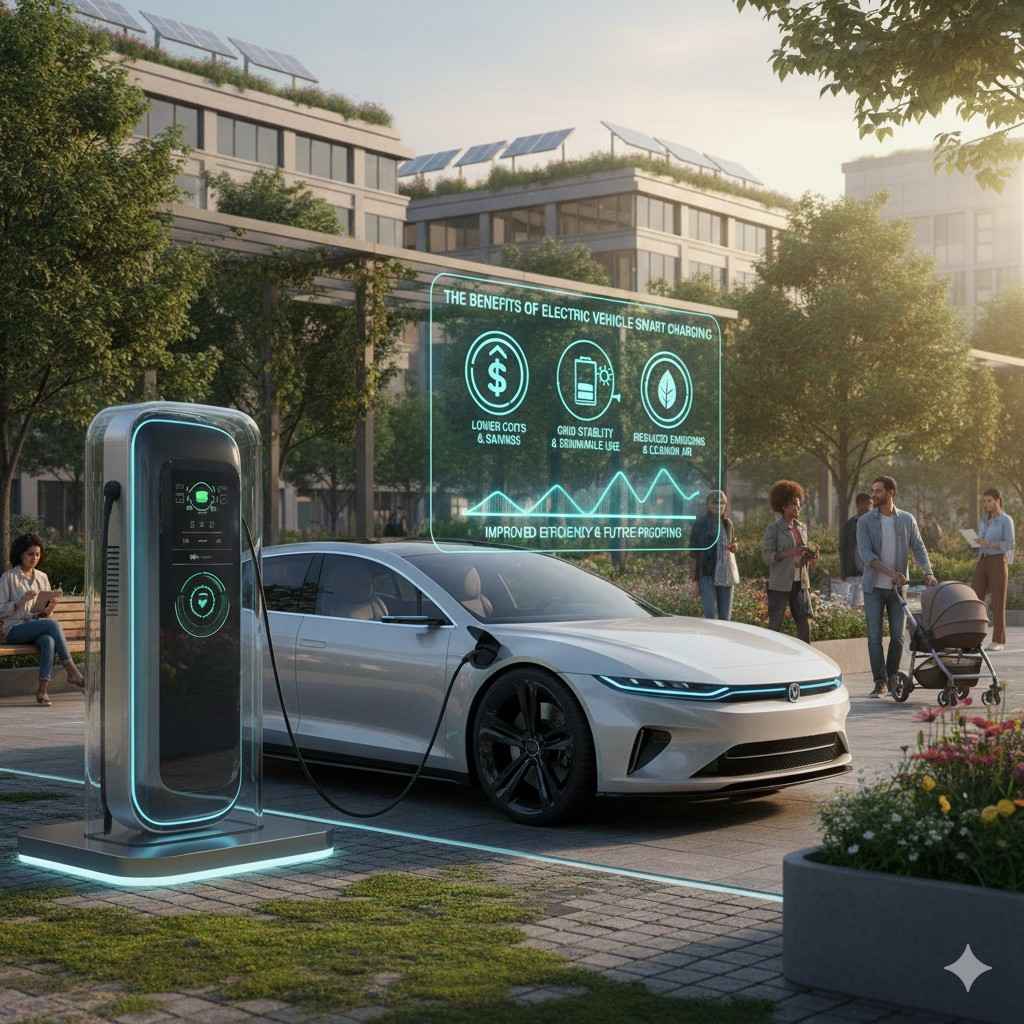
Here is the unique image illustrating The Benefits of Electric Vehicle Smart Charging.
The Benefits of Electric Vehicle Smart Charging
Cost Savings for EV Owners
One of the most significant benefits of electric vehicle smart charging is the potential for cost savings. By scheduling charging during off-peak hours when electricity prices are lower, EV owners can reduce their energy bills. Many utility companies offer time-of-use (TOU) pricing, which means that electricity is cheaper during specific times of the day. Smart electric vehicles take advantage of these pricing structures, allowing owners to charge their cars more affordably.
In addition, smart charging can help avoid demand charges, which are fees applied when electricity usage spikes during peak demand periods. By spreading out energy usage and charging during low-demand times, EV owners can avoid these extra costs.
Improved Energy Efficiency
Efficiency is at the heart of charging electric vehicles. By optimizing charging times and speeds, smart chargers reduce unnecessary energy consumption. This means that less electricity is wasted during the charging process, contributing to more sustainable energy usage.
Furthermore, smart charging helps balance the load on the energy grid. During peak demand hours, the grid is under stress, and energy providers may need to rely on less efficient power plants to meet the demand. Electric vehicle smart charging helps alleviate this pressure by reducing energy consumption during these times, ensuring that the grid operates more efficiently.
Grid Stability and Integration of Renewable Energy
The widespread adoption of electric vehicles presents challenges for the electricity grid, especially when it comes to stability and demand management. Vehicle smart charging plays a crucial role in maintaining grid stability by allowing energy providers to manage EV charging based on real-time demand and grid capacity.
Moreover, smart charging facilitates the integration of renewable energy sources, such as wind and solar power, into the grid. Renewable energy generation is often intermittent, meaning it fluctuates based on weather conditions. Smart charging of electric vehicles can be programmed to prioritize charging when renewable energy is abundant, helping reduce reliance on fossil fuels and lower carbon emissions.
Extending EV Battery Life
Another advantage of charging electric vehicles is their positive impact on battery longevity. Rapid charging or charging at high power levels can degrade EV batteries over time. Smart charging allows for gradual, controlled charging, which reduces the wear and tear on the battery, ultimately extending its lifespan.
By preventing overcharging and managing the charging rate, electric vehicle smart charging ensures that your EV’s battery remains in optimal condition for longer. This not only saves EV owners money on battery replacements but also reduces the environmental impact of battery production.
Supporting Fleet Management
For businesses with electric vehicle fleets, smart charging electric vehicles provides an efficient solution for managing multiple vehicles simultaneously. Fleet managers can schedule charging for multiple EVs during off-peak hours, reducing operational costs. Additionally, smart charging can ensure that all vehicles are fully charged and ready for use when needed, improving fleet productivity and reliability.
By optimizing energy usage across an entire fleet, vehicle smart charging can significantly reduce the overall cost of fleet operations while minimizing the environmental impact.
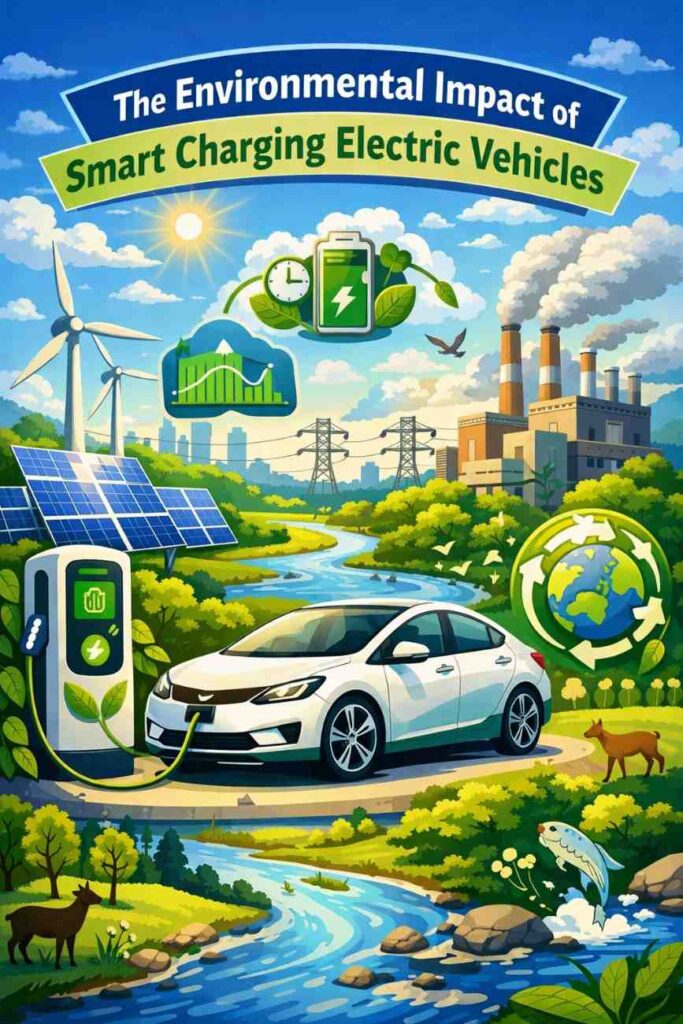
Here is the unique image representing the Environmental Impact and Challenges of Smart Charging Electric Vehicles.
The Environmental Impact of Smart Charging Electric Vehicles
The shift toward electric vehicles is widely regarded as a positive step for reducing greenhouse gas emissions. However, the environmental benefits of EVs are even greater when paired with vehicle smart charging. By optimizing the time and rate of charging, smart charging ensures that EVs rely more on renewable energy sources, reducing their carbon footprint.
Challenges and Considerations for Electric Vehicle Smart Charging
While the benefits of vehicle smart charging are clear, there are several challenges and considerations that must be addressed for widespread adoption.
Infrastructure Development
The success of smart charging of electric vehicles depends on the availability of smart chargers and the necessary infrastructure to support them. While many urban areas are rapidly expanding their charging networks, rural regions may still lack access to the necessary infrastructure. Governments and private companies must invest in expanding the charging infrastructure to ensure that EV owners can take full advantage of smart charging technology.
Cybersecurity Concerns
As electric vehicles’ smart charging relies on data and connectivity, cybersecurity is a critical concern. Smart charging systems collect and transmit data related to charging habits, locations, and grid usage, making them potential targets for cyberattacks. Ensuring the security and privacy of this data is essential for protecting both EV owners and the grid from unauthorized access.
Consumer Awareness and Education
Widespread adoption of smart charging electric vehicles will require increased consumer awareness and education. Many EV owners may not fully understand the benefits of smart charging or how to take advantage of it. Public awareness campaigns and user-friendly interfaces for smart chargers will be essential in encouraging consumers to adopt smart charging practices.
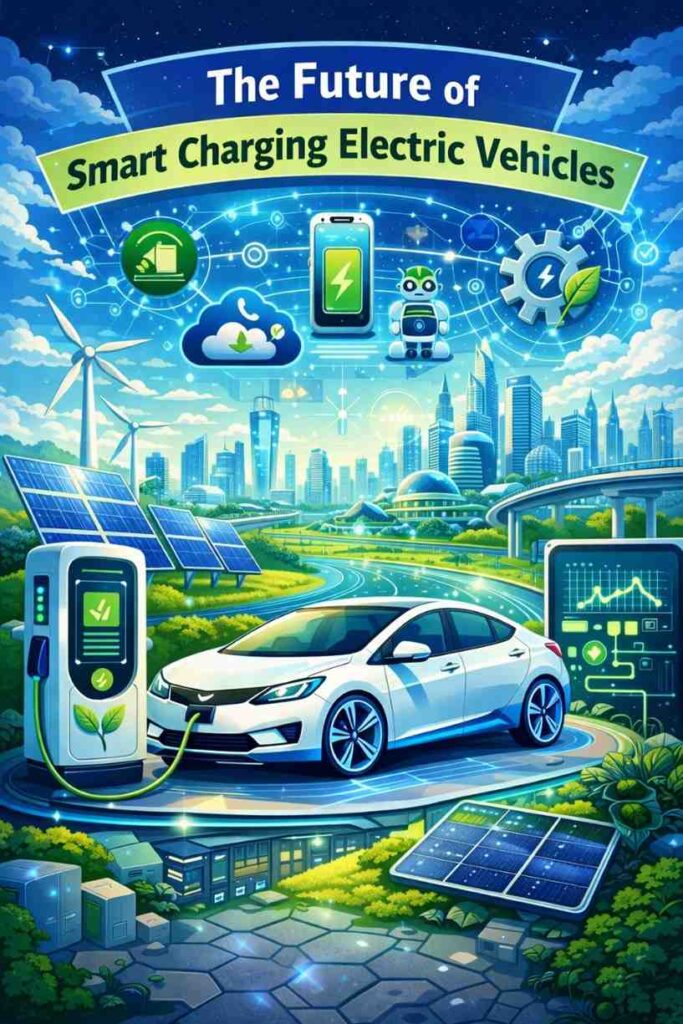
Here is the unique image illustrating The Future of Smart Charging Electric Vehicles.
The Future of Smart Charging Electric Vehicles
The future of electric vehicle smart charging is bright, with ongoing advancements in technology and infrastructure paving the way for more widespread adoption. Governments and utility companies are increasingly recognizing the importance of smart charging in managing energy demand and reducing environmental impacts. As more electric vehicles hit the road, charging electric vehicles will play a critical role in ensuring that the energy grid can handle the increased demand.
In the coming years, we can expect to see further integration of renewable energy sources with smart charging systems, as well as improvements in charger technology and grid management. Innovations such as vehicle-to-grid (V2G) technology, which allows EVs to return energy to the grid, will further enhance the role of electric vehicles in promoting grid stability and sustainability.
Frequently Asked Questions about Smart Charging
What is electric vehicle smart charging?
This refers to the intelligent management of EV charging, optimizing charging times, and reducing energy costs.
How does smart charging benefit electric vehicle owners?
Smart charging of electric vehicles allows owners to charge during off-peak hours, lowering energy costs while preventing grid overload.
Can smart charging improve grid stability?
Yes, electric vehicle smart charging helps balance electricity demand, allowing the grid to function more efficiently and sustainably.
How does smart charging affect battery life?
By managing charging rates, smart charging of electric vehicles can extend battery life by preventing excessive strain and overcharging.
Is smart charging available for all electric vehicles?
Many modern electric vehicles are compatible with smart charging, but older models may require additional equipment for optimal use.
How does smart charging reduce environmental impact?
Smart charging of electric vehicles promotes the use of renewable energy by scheduling charging when clean energy sources are more available.
What is the role of smart charging in fleet management?
For fleets, electric vehicle smart charging can optimize multiple vehicle charging schedules, ensuring efficiency and reducing operational costs.
Can smart charging help during energy shortages or peak demand?
Yes, smart charging electric vehicles can delay or reduce charging during peak demand, helping alleviate pressure on the energy grid.
How can electric vehicle owners control smart charging?
Owners can use mobile apps or smart chargers to set preferences, monitor charging status, and optimize charging based on real-time data.
Are there incentives for using smart charging?
Many utility companies offer incentives for electric vehicle smart charging, including discounted rates for off-peak charging and energy savings.
Conclusion for smart charging electric vehicles
Electric vehicle smart charging is a revolutionary advancement that promises to make EV charging more efficient, cost-effective, and environmentally friendly. By optimizing charging times and integrating renewable energy sources, charging electric vehicles not only benefits individual EV owners but also contributes to grid stability and sustainability.
As the technology continues to evolve, we will likely see even greater improvements in smart charging systems, making electric vehicles an even more attractive and sustainable option for transportation. With the right infrastructure, cybersecurity measures, and consumer education, smart charging of electric vehicles will play a pivotal role in shaping the future of electric transportation.
