



Wearing compression socks has many health benefits. However, some people wonder: Do you wear compression socks to bed? This question often comes up for those new to compression therapy. In this article, we’ll explore the facts, myths, and best practices.
What Are Compression Socks?
Compression socks are specially designed stockings that apply gentle, graduated pressure to your legs and ankles. This pressure helps promote better blood circulation by encouraging blood to flow upward toward the heart, which in turn reduces swelling, discomfort, and the feeling of heaviness in the legs. These socks are commonly used by individuals who suffer from poor circulation, varicose veins, or swelling caused by long periods of standing or sitting.
In addition, many athletes wear compression socks to enhance performance and speed up recovery, while travelers and pregnant women use them to prevent leg fatigue and maintain healthy blood flow during long hours of inactivity.
How Do Compression Socks Work?
These socks apply graduated pressure. This means the greatest pressure is concentrated around the ankle. It gradually decreases as it moves up the leg.
This design helps blood flow back to the heart. It also prevents blood from pooling in the lower legs.
Why Do People Wear Compression Socks?
There are several reasons people wear compression socks:
- To reduce leg swelling
- To prevent blood clots
- To relieve varicose vein discomfort
- To support circulation during travel
- To recover faster after exercise
Doctors often prescribe them after surgery. They may also be recommended for chronic conditions like lymphedema.
Do You Wear Compression Socks to Bed?
This is a common question. The short answer is no, in most cases, you should not wear them while sleeping.
Here’s why:
1. Your Body Is Horizontal at Night
When you sleep, your legs rest at the same level as your heart. Gravity isn’t pulling blood downward like when you’re standing or sitting.
So, compression isn’t usually needed at night. Your circulation works differently while you rest.
2. Compression Could Be Too Strong
Wearing tight socks for too long can restrict blood flow. That’s especially true if you’re lying down.
This can lead to numbness, tingling, or discomfort.
3. Your Skin Needs to Breathe
Wearing socks 24/7 can irritate your skin. Your skin may become sweaty, itchy, or inflamed overnight.
Letting your legs breathe while sleeping is usually healthier.

When Is It OK to Wear Compression Socks at Night?
Some people may need to wear them while sleeping. But only under medical advice.
1. Doctor’s Recommendation
Certain conditions may require nighttime compression. This includes severe lymphedema or post-surgery recovery.
Always follow your doctor’s instructions.
2. Special Nighttime Compression Garments
There are socks made for sleeping. These use lower pressure and softer material.
If you must wear compression socks at night, use these specially designed ones.
3. Hospital Settings
In hospitals, patients may wear compression socks 24/7. This helps reduce the risk of blood clots during extended periods of inactivity.
Again, this is done under supervision.
How Long Should You Wear Compression Socks?
Most people wear compression socks throughout the day to get the maximum benefit. Ideally, you should put them on in the morning before you start your daily activities, when swelling in the legs and feet is minimal. Wearing them during the day helps improve blood circulation, reduce fatigue, and prevent fluid buildup, especially if you spend long hours standing, walking, or sitting.
As the day ends, you can take them off before going to bed to allow your skin to breathe and your legs to relax. However, if your doctor advises otherwise, always follow their specific recommendations for wear time.
A common routine:
- Put them on when you wake up
- Keep them on during daily activity
- Take them off before sleeping
This is safe and effective for most people.
How to Choose the Right Compression Socks
Not all compression socks are the same. You should consider the following factors:
1. Compression Level
Measured in mmHg (millimeters of mercury). Mild discomfort is addressed with lower levels (8–15 mmHg), while higher levels (20–30 mmHg or above) serve medical purposes.
2. Size and Fit
Proper sizing is essential. Too tight can hurt; too loose won’t help.
Measure your legs before buying.
3. Material and Style
Choose breathable and durable fabric. Styles range from knee-high to thigh-high.
Pick one that suits your needs and lifestyle.
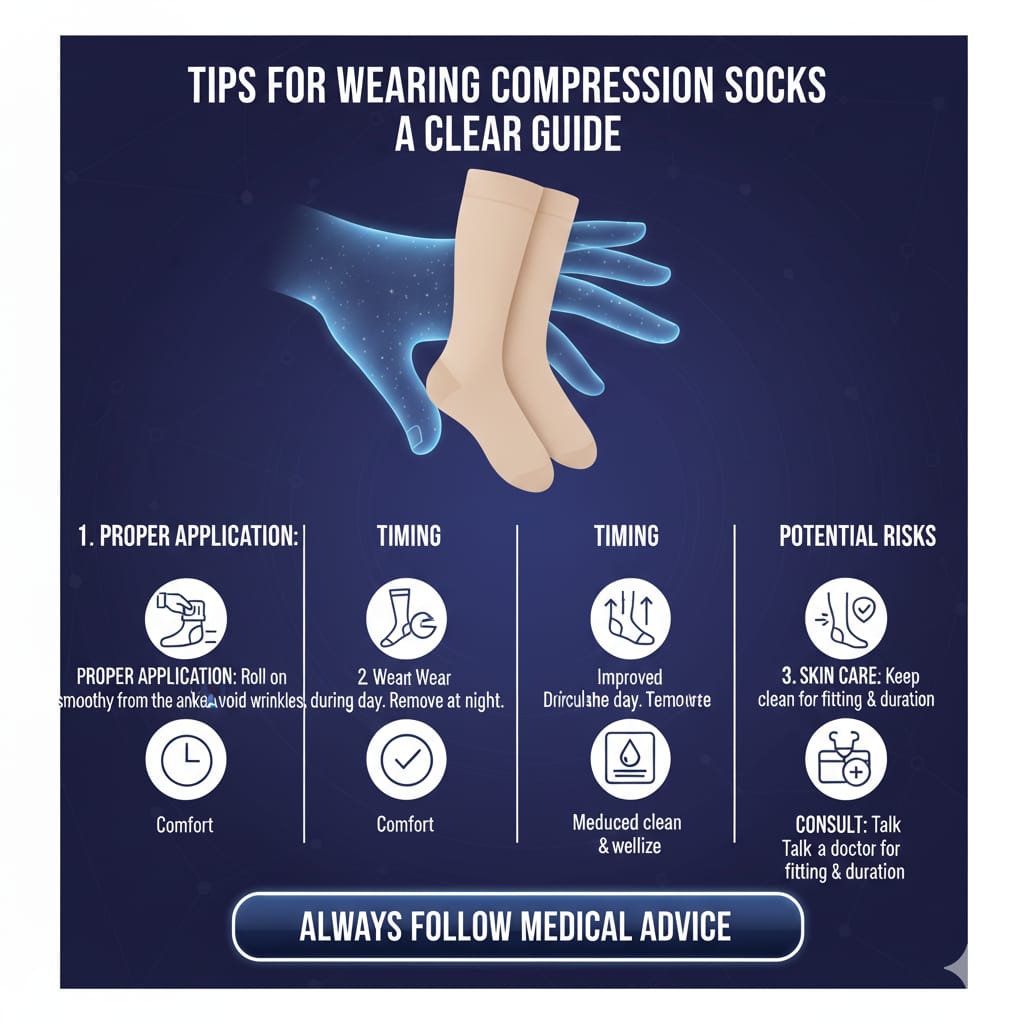
Tips for Wearing Compression Socks
- Use them throughout the day, but avoid wearing them while sleeping.
- Put them on in the morning
- Remove them before sleeping
- Wash them regularly
- Replace them every 3–6 months
These tips help you stay safe and comfortable.
Common Myths About Compression Socks
Myth 1: You should wear them all the time
Truth: Wearing them overnight is rarely necessary
Myth 2: Tighter is always better
Truth: Too much pressure can cause harm
Myth 3: Only older people need them
Truth: Many young adults and athletes use them too
Frequently Asked Questions (FAQ)
1. Do you wear compression socks to bed?
Generally, no. You should remove them before sleeping unless advised by a doctor.
2. Can I wear them all day?
Yes, during waking hours. Most people wear them from morning to evening.
3. What happens if I wear them at night?
They may cause discomfort or skin issues. Blood flow could be restricted when lying down.
4. Are there compression socks made for sleeping?
Yes, but they are different from daytime socks. Ask your doctor before using them.
5. Should I wear compression socks while traveling overnight?
Yes, if you’re sitting or lying down for long periods, like on a plane. But remove them when going to bed.
6. Who should avoid compression socks?
People with peripheral artery disease or certain skin conditions may need to avoid them. Always consult a healthcare provider.
7. How do I know what pressure level to choose?
Mild compression is good for general use. For medical conditions, ask a doctor for guidance.
Final Thoughts
So, do you wear compression socks to bed? In most cases, you should not. Your body doesn’t need the same support during sleep. Let your legs rest and breathe.
However, if you have a medical condition, follow your doctor’s advice. Choose the appropriate compression strength and type that best suits your needs. Compression socks can be helpful, but only when used correctly.
Always remember—your health comes first.
