


A sprained ankle is a very common yet painful injury. It happens when ankle ligaments are stretched or torn. Swelling, pain, and bruising usually follow immediately. Proper treatment is essential for quick and complete healing. The standard protocol often involves the R.I.C.E. method. This stands for Rest, Ice, Compression, and Elevation. Therefore, a compression socks for sprained ankle care is critical. This specialized hosiery provides necessary support and therapeutic pressure. Wearing a compression sock for sprained ankle healing can significantly speed up recovery time.
Understanding the Mechanics of a Sprained Ankle
An ankle sprain occurs when the foot twists or rolls. This forces the ankle joint out of its normal position. Ligaments connecting the leg bones to the foot are damaged. The severity is graded from mild (Grade 1) to severe (Grade 3). A Grade 1 sprain means ligaments are only slightly stretched. Conversely, a Grade 3 sprain means a complete tear. In all cases, a compression sock for sprained ankle management is often recommended. This tool helps mitigate the common symptoms of the injury.
The Science Behind Compression for Sprains
Compression is key to managing acute soft tissue injuries. The gentle pressure from a compression socks for sprained ankle injury helps. It works by preventing excessive fluid buildup in the tissues. This accumulation of fluid causes noticeable swelling and pain. By applying consistent pressure, the compression socks for sprained ankle helps your body. It aids in moving excess fluid away from the injured area. Furthermore, compression encourages better blood circulation overall. Enhanced blood flow delivers vital oxygen and nutrients. This is crucial for repairing the damaged ligament fibers.
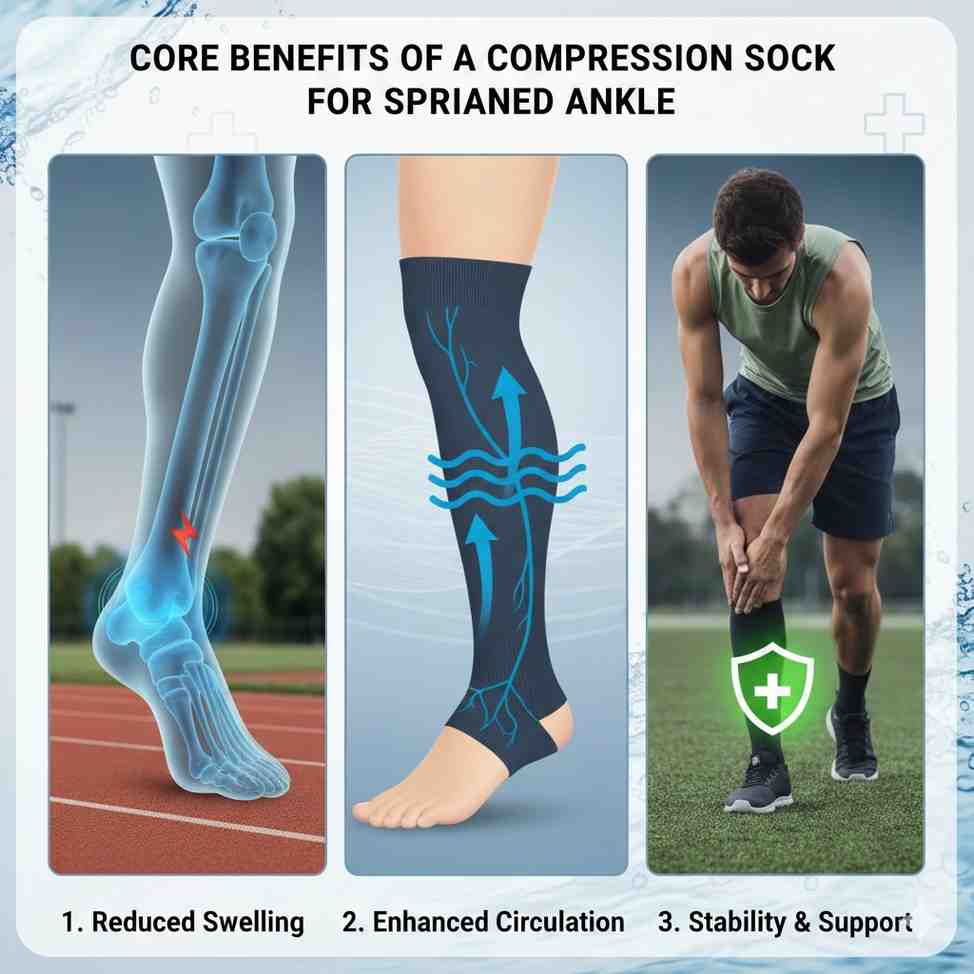
Core Benefits of a Compression Sock for Sprained Ankle
A compression socks for sprained ankle offers numerous advantages during recovery.
Reducing Swelling and Inflammation
The primary benefit is the reduction of swelling. Swelling is the body’s natural response to injury. However, too much swelling causes discomfort and delays healing. A quality compression sock for sprained ankle applies graduated pressure. This means it is tightest at the ankle and loosens higher up the leg. This gradient design efficiently pushes fluid back toward the heart. Thus, it significantly decreases swelling around the joint. Less swelling means less pressure on nerve endings.
Alleviating Pain and Discomfort
Reduced swelling directly leads to pain relief. Also, the support offered by a compression socks for sprained ankle provides comfort. The gentle yet firm pressure helps stabilize the joint. This stabilization can lessen painful movements that occur accidentally. Some studies suggest compression may promote the release of natural pain-relieving hormones. Therefore, wearing a compression sock for sprained ankle can improve overall well-being.
Enhancing Stability and Preventing Re-injury
An injured ankle is often unstable and weak. The snug fit of a compression socks for sprained ankle offers light support. This added stability helps protect the delicate ligaments. It provides a reminder to move the joint cautiously. Using a compression socks for sprained ankle reduces the risk of rolling it again. Preventing re-injury is paramount for a successful recovery process.
Promoting Faster Tissue Healing
Improved blood flow is essential for healing sprains. The action of a compression socks for sprained ankle boosts circulation. It ensures the damaged area receives fresh, oxygenated blood. This nutrient-rich blood is necessary for cellular repair. As a result, the body’s natural healing process is accelerated. Combining rest with a compression socks for sprained ankle is highly effective.
How to Select the Right Compression Sock for Sprained Ankle
Choosing the correct sock is vital for efficacy and comfort. You should always consult a healthcare professional first.
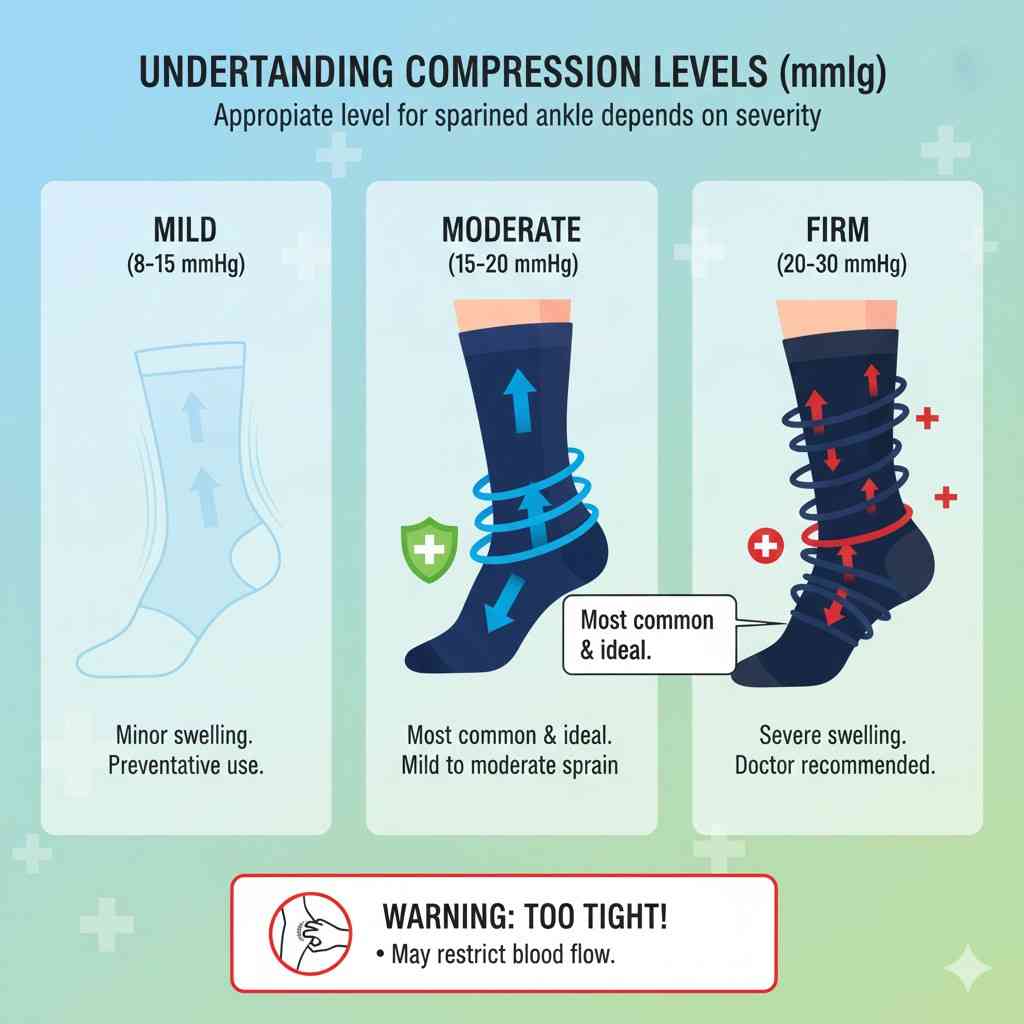
Understanding Compression Levels (mmHg)
Compression levels are measured in millimeters of mercury (mmHg). The appropriate level for a compression socks for sprained ankle depends on severity.
- Mild (8-15 mmHg): This level is suitable for very minor swelling or preventative use.
- Moderate (15-20 mmHg): This is the most common and ideal range. It works well for a mild to moderate sprained ankle. It balances effective pressure with comfortable wear.
- Firm (20-30 mmHg): This higher level may be recommended by a doctor. It is used for more severe swelling or certain medical conditions.
Never choose a compression level that is too tight. A sock that is too tight can actually hinder circulation. A moderate compression socks for sprained ankle is often the best choice initially.
Considering Sock Length and Fit
The sock should provide adequate compression around the ankle. Calf-length or knee-high styles are usually recommended. Proper fit is more important than length for effectiveness. Measure your ankle and calf circumference carefully. Consult the manufacturer’s sizing chart every time. A well-fitting compression sock for sprained ankle should be snug. It must not feel painfully restrictive or cause numbness. Poorly fitting socks will not deliver the intended benefits.
Material and Design Features
Look for breathable and moisture-wicking materials. Nylon, spandex, or a blend are common. These materials help keep the skin dry and comfortable. Some socks offer targeted compression zones. Others include extra padding for the heel and arch area. Choosing a durable material is also important for long-term use.
Integration with the R.I.C.E. Protocol
The R.I.C.E. method remains the gold standard for sprain care.
- Rest: Avoid putting weight on the injured ankle for at least 48 hours. A compression socks for sprained ankle should be worn while resting.
- Ice: Apply an ice pack for 15-20 minutes every few hours. This reduces acute inflammation and pain. Remove the compression sock before icing the area.
- Compression: Use the compression sock for sprained ankle consistently throughout the day. Put it on first thing in the morning before swelling starts.
- Elevation: Keep the ankle raised above the level of your heart. Do this whenever you are resting or sitting down. Elevation works synergistically with your compression sock.
When to Wear Your Compression Sock for Sprained Ankle
Most experts advise wearing the sock during the day. Swelling tends to be worse when you are upright. Put on your compression socks for sprained ankle before getting out of bed. Take it off before sleeping at night. For high-grade compression, do not wear it for more than 8-12 hours straight. Always follow the specific advice from your doctor.
Important Disclaimer and Final Thoughts
A compression socks for sprained ankle is a supportive tool. It is not a replacement for proper medical evaluation. Always see a doctor for any suspected sprain or injury. They can rule out a fracture or other serious complications. They will also guide you on the best treatment plan. However, incorporating a high-quality compression sock for sprained ankle care can be immensely helpful. It supports the healing process effectively. The right compression socks for sprained ankle can provide comfort and speed up your return to activity. This simple measure is a powerful component of sprain recovery. Continue to prioritize rest and rehabilitation exercises.
Frequently Asked Questions (FAQ)
Q: Can I sleep in a compression sock for sprained ankle?
A: Generally, no, it is not recommended to sleep in one. Your legs are already elevated at night. This naturally reduces swelling while you sleep. However, always consult your physician for personalized advice.
Q: How long should I wear my compression sock for sprained ankle?
A: You should wear it daily for the first one to two weeks. Continue until swelling has significantly decreased. Your doctor will provide the best specific duration.
Q: Should I use a compression sock or a brace for a sprain?
A: A brace offers more rigid stabilization than a sock. A compression sock for sprained ankle is often used for mild to moderate sprains. It is also good for later-stage recovery. Your doctor will determine the best device for your specific injury.
Q: Will a compression sock make my sprain heal faster?
A: Yes, it can help accelerate the healing process. It reduces swelling and promotes better blood flow. These actions create an optimal environment for tissue repair.
Q: What if my compression sock for sprained ankle feels too tight?
A: Remove the sock immediately if you experience numbness or pain. A sock that is too tight can impede proper circulation. Check your measurements and consider a lower compression level.
Q: Are all compression socks for sprained ankle the same?
A: No, they differ in compression level and design. Graduated compression is most effective for sprains. Choose the right level and fit for your needs.
Q: Can I exercise while wearing a compression sock for sprained ankle?
A: Yes, a compression sock for sprained ankle can provide support during light activity. Only do exercises approved by your physical therapist or doctor.