



Leg health is essential for mobility, comfort, and daily performance. Many people rely on compression socks for circulation support. However, some individuals may feel discomfort or dislike wearing tight garments. For them, finding an alternative to compression socks becomes a practical choice.
This guide explores the most effective alternatives, comparing benefits, comfort, and lifestyle compatibility. By the end, you will discover the best alternative to compression socks that suits your personal needs.
What Are Compression Socks?
Compression socks are specially designed garments that apply pressure to the legs and feet. They use graduated compression—tightest near the ankle and loosening upward—to encourage blood circulation back to the heart.
They are widely prescribed for swelling, varicose veins, or after surgery. Yet, not everyone enjoys wearing them. That is why considering an alternative to compression socks becomes important for many individuals.
Why Consider an Alternative to Compression Socks?
There are several reasons why people prefer looking for alternatives:
1. Comfort Issues
Some find compression socks restrictive or overly tight for daily wear.
2. Skin Sensitivity
Individuals with delicate or allergic skin may develop irritation from certain fabrics.
3. Limited Mobility
Compression socks can sometimes feel restrictive, especially during physical activity.
4. Fashion and Style
Traditional designs may not align with personal style preferences.
Because of these reasons, many explore at least one alternative to compression socks that feels practical and comfortable.
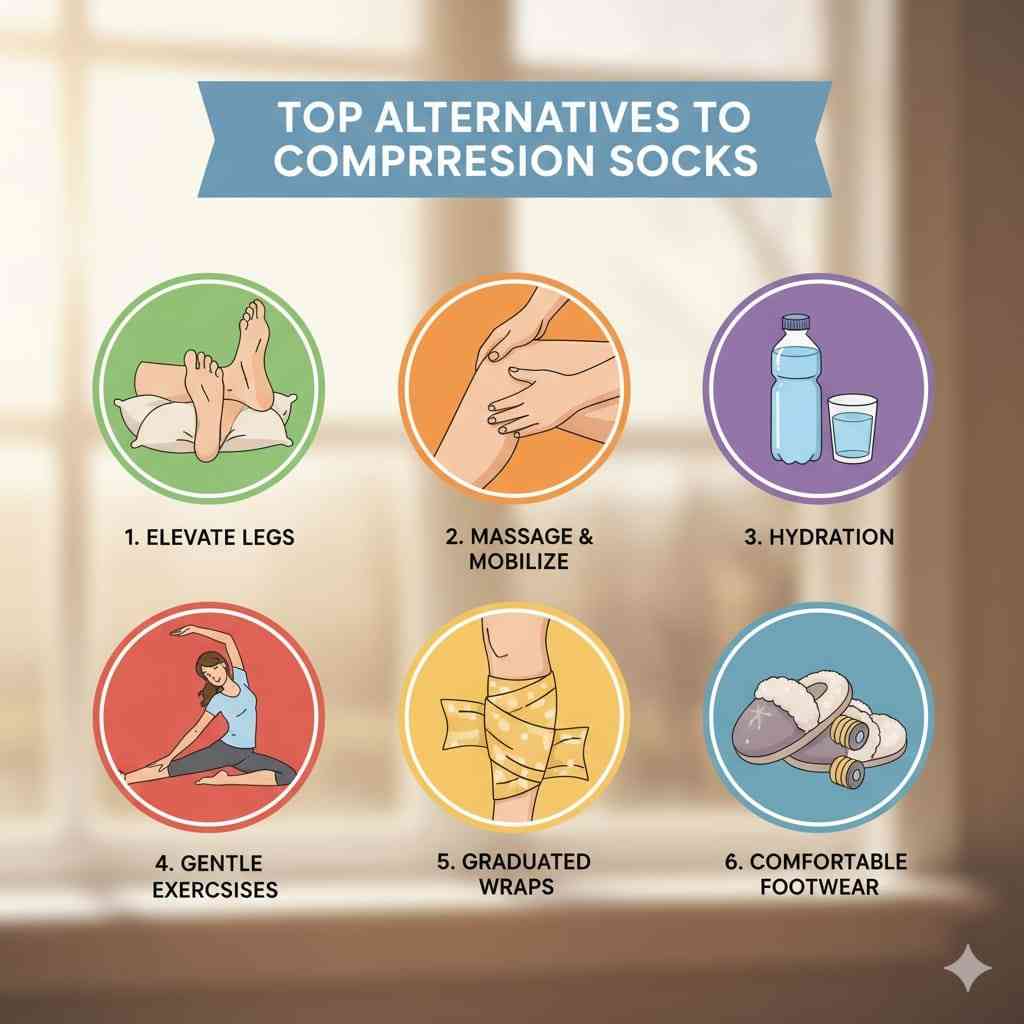
Top Alternatives to Compression Socks
1. Graduated Compression Sleeves
Graduated compression sleeves are a highly popular alternative to compression socks. Unlike socks, they cover only the lower leg.
They provide targeted support while allowing the feet to remain free. Many athletes prefer sleeves during running, cycling, or training.
2. Leg Elevation
Leg elevation is an excellent natural alternative to compression socks. Raising legs above heart level reduces swelling and encourages blood return.
You can use pillows or leg wedges to achieve elevation comfortably at home. This technique is especially effective after long hours of sitting.
3. Foam Rollers and Massage Tools
Massage therapy works as a soothing alternative to compression socks. Foam rollers and handheld massagers improve circulation and reduce tightness.
Self-massage stimulates blood flow, easing discomfort after strenuous physical activities. Regular use enhances muscle flexibility while supporting leg health.
4. Exercise and Stretching
Exercise is the simplest alternative to compression socks and requires no special equipment. Low-impact activities like walking, yoga, or swimming boost circulation naturally.
Stretching calf muscles and performing ankle rotations also reduce stiffness and promote healthier blood flow throughout the legs.
5. Hydration and Diet
Hydration is a supportive alternative to compression socks for maintaining circulation. Proper water intake prevents fluid retention and swelling.
Additionally, including foods rich in potassium and magnesium supports vascular health and reduces leg fatigue.
6. Specialized Supportive Footwear
Wearing ergonomically designed shoes can be an effective alternative to compression socks. Proper footwear reduces strain on legs and supports circulation.
Insoles with arch support also help distribute pressure evenly, improving overall comfort and mobility.
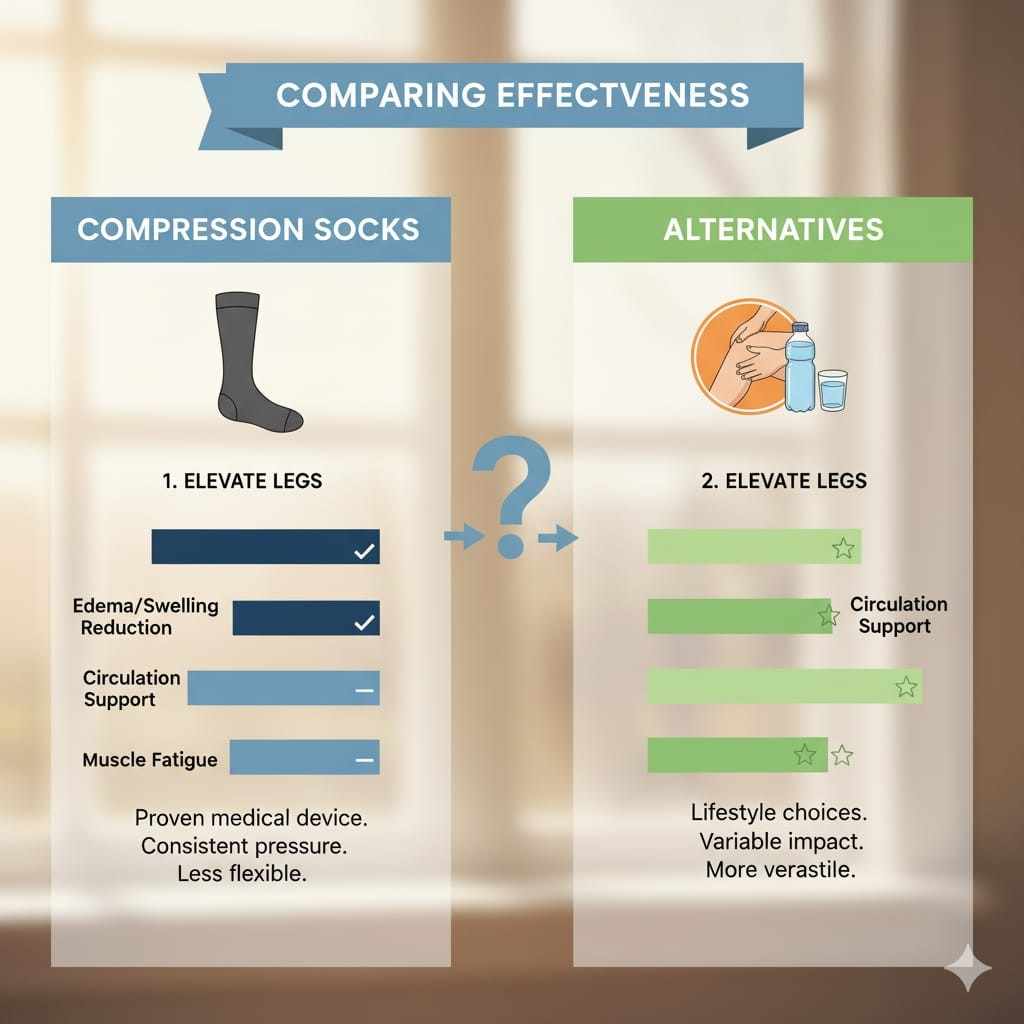
Comparing Effectiveness: Compression Socks vs. Alternatives
Compression socks remain highly effective for targeted vein support. However, each alternative to compression socks provides unique benefits.
Effectiveness: Compression socks directly treat swelling, while alternatives support circulation in more natural ways.
Comfort: Many alternatives provide greater comfort for daily use without the restrictive sensation.
Flexibility: Alternatives allow customization. For example, sleeves can be worn during exercise, while leg elevation works for rest.
Style Options: Alternatives often offer more stylish or subtle choices compared to medical compression socks.
Therefore, choosing an alternative to compression socks often depends on lifestyle and comfort preferences.
Choosing the Right Alternative to Compression Socks
When selecting the best alternative to compression socks, keep these factors in mind:
1. Lifestyle Needs
If you exercise regularly, compression sleeves may suit you better than leg elevation.
2. Existing Medical Conditions
Always consult a healthcare professional before replacing prescribed compression therapy.
3. Comfort Preferences
Consider whether you prefer movement freedom, breathable fabric, or style flexibility.
4. Budget
Some alternatives like massage tools require investment, while leg elevation is almost free.
Making the right choice ensures your alternative to compression socks provides long-term benefits without unnecessary compromise.
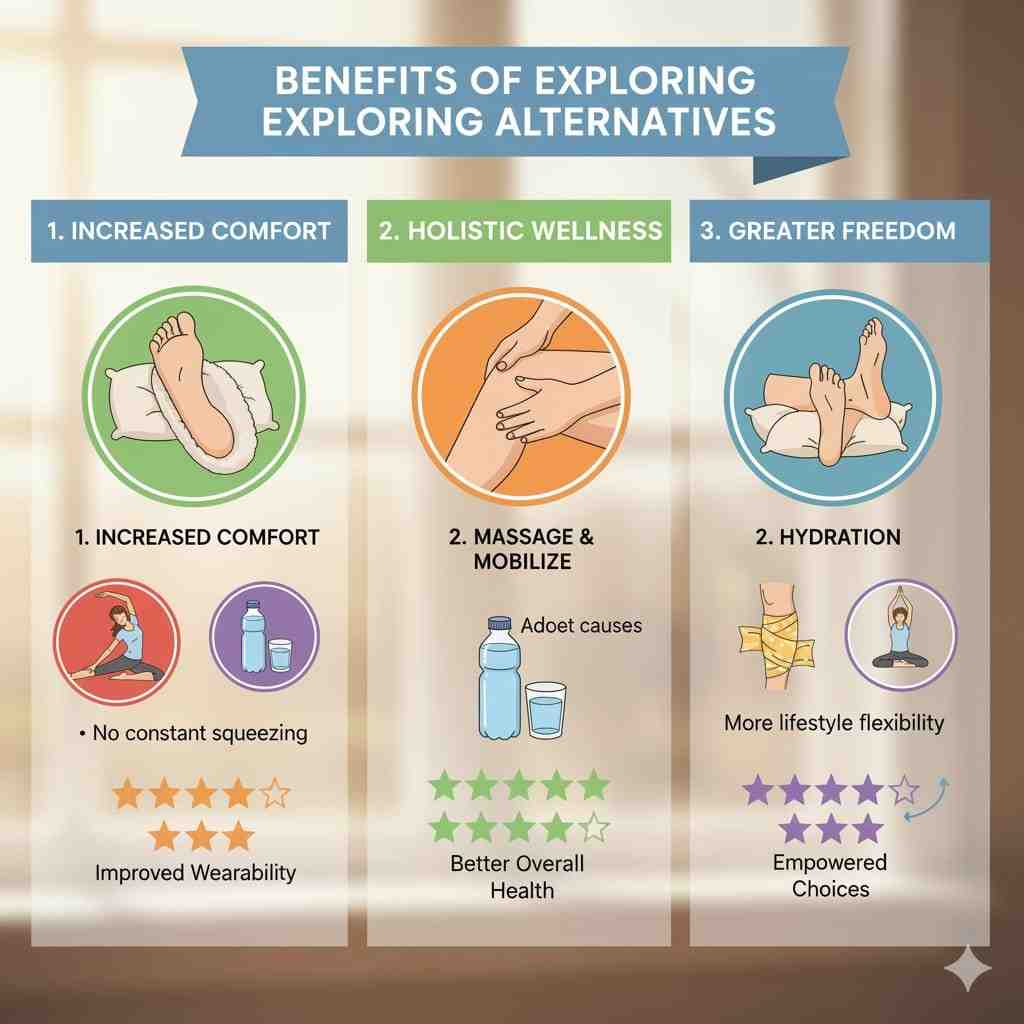
Benefits of Exploring Alternatives to Compression Socks
There are multiple advantages to considering alternatives:
1. Enhanced Comfort
Alternatives reduce the tightness associated with compression socks while still supporting circulation.
2. Greater Versatility
You can combine several alternatives for maximum benefit, such as exercise plus leg elevation.
3. Style Flexibility
Alternatives allow more fashionable choices, especially when appearance matters.
4. Accessibility
Most alternatives are easy to adopt daily, requiring minimal effort or cost.
These factors make choosing an alternative to compression socks an attractive and practical decision.
Frequently Asked Questions (FAQ)
Q: Are alternatives to compression socks effective for everyone?
A: Effectiveness varies. Some benefit more from exercise, while others respond better to massage or sleeves.
Q: Can I combine alternatives with compression socks?
A: Yes, combining strategies often provides better results. For example, wear sleeves during workouts and elevate legs afterward.
Q: How often should I exercise for circulation benefits?
A: Aim for at least 30 minutes of low-impact exercise five days weekly for consistent results.
Q: Which alternative to compression socks is most affordable?
A: Leg elevation and hydration are the least expensive options, requiring no additional purchases.
Q: Do alternatives prevent deep vein thrombosis (DVT)?
A: Some help reduce risks, but compression socks remain the gold standard for DVT prevention. Always consult your doctor.
Q: Are compression sleeves as effective as socks?
A: Sleeves provide circulation support but do not cover the foot, so results may vary depending on your needs.
Q: When should I seek medical advice regarding leg discomfort?
A: Consult a healthcare professional if you experience persistent swelling, pain, or circulation issues despite trying alternatives.
Conclusion
Maintaining healthy legs requires effective solutions for circulation and comfort. While compression socks are widely recommended, many people seek a suitable alternative to compression socks for personal reasons.
Graduated sleeves, leg elevation, massage, exercise, hydration, and supportive footwear all provide valuable support. Each alternative offers unique advantages, from enhanced comfort to greater flexibility.
By considering lifestyle, health conditions, and preferences, you can find the most effective alternative to compression socks. Remember, consistent practice—whether through exercise, hydration, or supportive tools—leads to better circulation, reduced swelling, and lasting comfort.
Ultimately, exploring an alternative to compression socks is not just about replacing a garment. It is about adopting healthier habits, improving circulation naturally, and supporting long-term leg health.
