


When it comes to achieving exceptional sound quality, speakers with copper wire have consistently proven to be one of the best choices for audiophiles and casual listeners alike. Copper, being one of the most conductive materials, ensures efficient signal transmission, resulting in clear, powerful, and distortion-free audio output. This comprehensive guide explores everything you need to know about speaker with copper wire — from their design and advantages to installation, maintenance, and frequently asked questions.
Understanding the Role of Copper Wire in Speakers
Copper wire is an essential component of modern speakers. It serves as the medium that transmits electrical signals from the amplifier to the speaker driver, converting them into sound waves. Speakers with copper wire use high-purity copper conductors to ensure minimal signal loss, allowing music and audio to retain their intended clarity and detail.
Why Copper is the Preferred Material
Copper is known for its high electrical conductivity, second only to silver. However, it is much more affordable and durable than silver, making it ideal for use in audio equipment. In speaker with copper wire, this translates into:
- Improved signal transmission with minimal resistance.
- Reduced heat generation during prolonged use.
- Consistent performance across various frequencies.
- Enhanced sound accuracy for both highs and lows.
As a result, speaker with copper wire deliver a natural, balanced, and detailed sound profile.
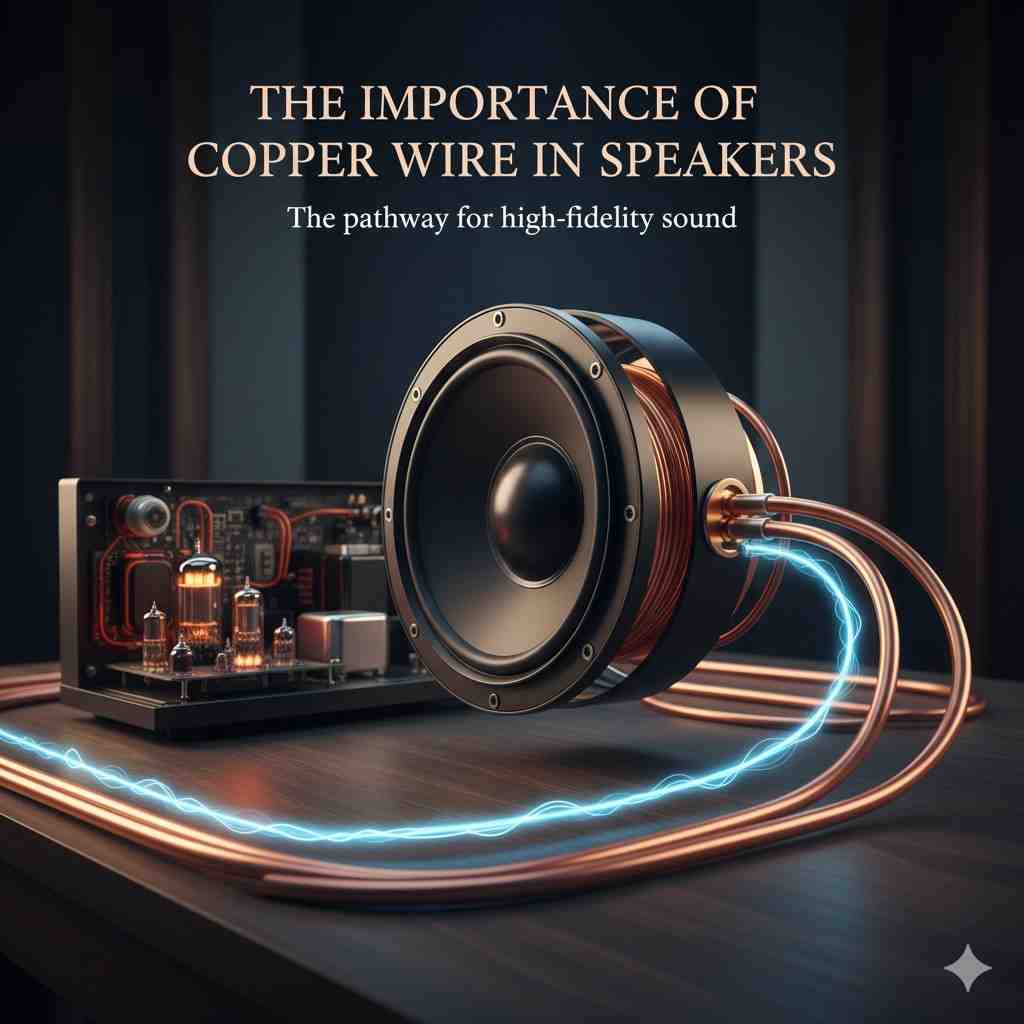
The Importance of Copper Wire in Speakers
Copper wire plays a crucial role in determining the performance, durability, and sound quality of speakers. It serves as the pathway for electrical signals from an amplifier or audio source to the speaker drivers, where those signals are converted into sound waves. The purity and conductivity of copper make it the industry standard for high-fidelity audio systems.
Here’s why copper wire is so important in speakers:
1. Excellent Electrical Conductivity
Copper is one of the most conductive metals, second only to silver. This means electrical signals can travel through copper wire with minimal resistance, ensuring that sound signals reach the speaker drivers efficiently and without distortion.
2. Accurate Sound Reproduction
Because of its low resistance, copper wire allows precise transmission of audio signals. This results in cleaner highs, deeper lows, and balanced midrange frequencies, making speakers with copper wire ideal for both professional and personal audio setups.
3. Reduced Signal Loss
When current travels long distances or through poor-quality wiring, signal loss can occur. Copper wire minimizes this issue, preserving the integrity and clarity of the sound even at higher volumes or extended cable lengths.
4. Durability and Longevity
Copper is naturally resistant to corrosion and oxidation, which makes speaker with copper wire long-lasting. They maintain performance over time, unlike aluminum or copper-clad aluminum (CCA) wires that degrade faster.
5. Efficient Heat Dissipation
During high-power audio output, heat can build up within the speaker’s wiring. Copper wire effectively dissipates heat, preventing internal damage and ensuring consistent performance during long listening sessions.
6. Versatility in Audio Applications
Copper wire is suitable for a wide range of speakers—from home theater systems and car audio to studio monitors and public address systems. Its flexibility and conductivity make it a universal choice for delivering premium sound quality.
7. Cost-Effectiveness
While silver conducts slightly better, copper offers an almost identical performance at a fraction of the cost. This makes speakers with copper wire the most cost-efficient and high-performing solution for everyday and professional audio use.
In essence, the importance of copper wire in speakers lies in its ability to deliver clear, distortion-free, and powerful sound, all while ensuring longevity and stability. Whether you’re an audiophile or a casual listener, choosing speaker with copper wire guarantees a superior listening experience.
The Science Behind Speakers with Copper Wire
To understand the performance benefits, it’s important to look at the science behind how speakers with copper wire operate. When an electric current passes through the copper coil inside the speaker, it creates a magnetic field. This interacts with the permanent magnet inside the speaker, causing the diaphragm to move and produce sound waves.
Because copper has low electrical resistance, it allows the current to flow smoothly. This results in precise diaphragm movement, which is crucial for accurate sound reproduction. Thus, speaker with copper wire are capable of delivering clean and powerful sound without unwanted noise or distortion.
Advantages of Speakers with Copper Wire
1. Superior Conductivity
One of the greatest advantages of speaker with copper wire is their superior conductivity. This property allows the signal to travel faster and more efficiently, leading to better sound quality.
2. Durability and Longevity
Copper is not only conductive but also highly durable. It resists corrosion and oxidation, ensuring that speaker with copper wire last for years with consistent performance.
3. Reduced Signal Loss
Signal loss can degrade audio quality. However, speakers with copper wire minimize this issue, maintaining the strength and integrity of the signal from the amplifier to the speaker cone.
4. Excellent Heat Resistance
During extended listening sessions or at high volumes, speakers can heat up. The use of copper wire helps dissipate heat effectively, preventing damage to the internal components.
5. Compatibility with Various Audio Systems
Whether you’re using a home theater setup, a professional studio, or a car audio system, speakers with copper wire are highly versatile and compatible with most amplifiers and receivers.
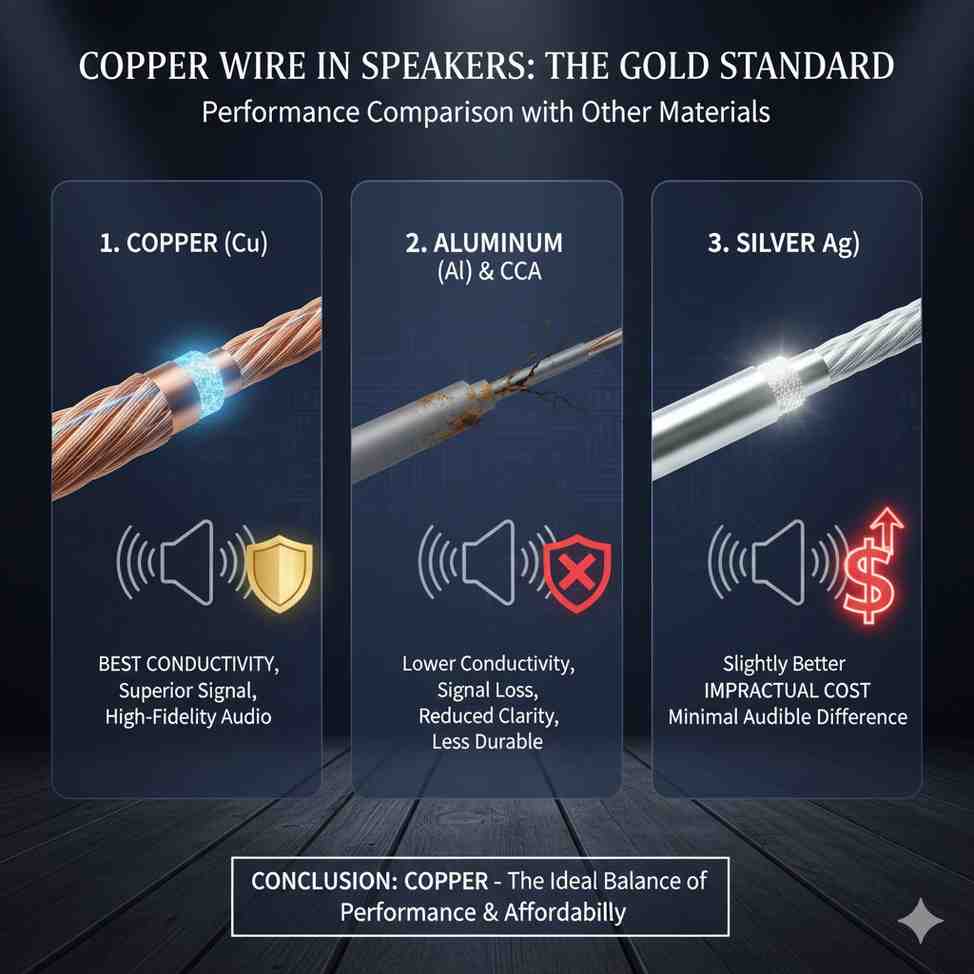
Comparing Speakers with Copper Wire and Other Materials
Copper vs. Aluminum
While aluminum is sometimes used as a cheaper alternative, it cannot match the conductivity of copper. Speakers with copper wire offer lower resistance and better signal transmission, resulting in higher sound fidelity.
Copper vs. Silver
Silver has slightly better conductivity than copper, but the difference is negligible for most listeners. Moreover, the cost of silver makes it impractical for widespread use. Therefore, speakers with copper wire strike the perfect balance between performance and affordability.
Copper vs. CCA (Copper-Clad Aluminum)
Some manufacturers use copper-clad aluminum wires to cut costs, but they are less durable and conductive. Speaker with copper wire, on the other hand, deliver superior long-term performance and sound clarity.
How to Choose the Best Speakers with Copper Wire
1. Check Wire Gauge (AWG)
The thickness of the copper wire, measured in American Wire Gauge (AWG), affects performance. Lower gauge numbers mean thicker wires and better conductivity. For high-power audio systems, opt for lower AWG values in speakers with copper wire.
2. Inspect the Copper Purity
High-purity oxygen-free copper (OFC) is ideal for premium audio performance. Speaker with copper wire made from OFC reduce oxidation and signal degradation over time.
3. Consider the Speaker Design
Look for speakers that have a solid internal build with properly wound copper coils. The better the design, the more efficiently the speaker will utilize the copper wiring.
4. Power Handling Capacity
Ensure that the speaker with copper wire can handle your amplifier’s power output. This will prevent distortion and overheating during use.
5. Brand Reputation and Warranty
Always go for trusted brands that offer warranties and use genuine copper wiring. Many counterfeit products claim to use copper but contain alloys that compromise performance.
Installation Tips for Speakers with Copper Wire
Installing speakers with copper wire properly can greatly influence sound performance. Follow these steps for the best results:
- Ensure Proper Polarity: Connect positive and negative terminals correctly to avoid phase cancellation.
- Use Quality Connectors: Gold-plated connectors maintain stable connections and prevent corrosion.
- Avoid Sharp Bends: Copper wires are flexible, but sharp bends can damage the internal structure and affect performance.
- Keep Cable Lengths Short: The longer the wire, the greater the resistance. Use only as much wire as necessary for the setup.
- Secure the Connections: Loose connections can lead to signal loss and sound distortion.
Maintenance of Speakers with Copper Wire
To maintain optimal performance, follow these simple care tips:
- Regularly inspect the wires for any signs of corrosion or wear.
- Keep the speakers dust-free to prevent buildup on the diaphragm.
- Avoid exposure to moisture, as even copper can corrode over time if not protected.
- Check connections periodically to ensure they are tight and clean.
By maintaining your speaker with copper wire properly, you can enjoy top-quality sound for many years.
Applications of Speakers with Copper Wire
Speakers with copper wire are used in various applications, including:
- Home Audio Systems: For rich, immersive sound.
- Car Audio Systems: For dynamic, high-fidelity playback.
- Professional Studios: To capture the smallest sound details.
- Theater Systems: For powerful surround sound experiences.
- Public Address Systems: For clear voice projection over long distances.

Future of Speakers with Copper Wire
As audio technology continues to evolve, speakers with copper wire are also becoming more efficient. Manufacturers are experimenting with oxygen-free and high-purity copper variants to further improve conductivity and reduce distortion. Despite the emergence of wireless and digital alternatives, the reliability and performance of speaker with copper wire keep them in high demand among audio enthusiasts.
Frequently Asked Questions (FAQ)
1. Are speakers with copper wire better than regular speakers?
Yes. Speakers with copper wire offer better conductivity, less signal loss, and clearer sound than those made with inferior materials like aluminum or CCA.
2. Do copper wires affect sound quality significantly?
Absolutely. The purity and gauge of the copper wire directly influence the sound quality and efficiency of the speaker.
3. How can I identify real copper wire in speakers?
Real copper wires have a reddish-brown color, while aluminum or CCA wires appear silverish. Also, genuine speaker with copper wire are usually labeled as such by reputable manufacturers.
4. Can I use copper wire for all types of speakers?
Yes, copper wire is universally compatible and performs exceptionally well in all speaker types, including home, car, and studio systems.
5. How long do speakers with copper wire last?
With proper care and maintenance, speakers with copper wire can last over a decade without significant degradation in performance.
6. Is oxygen-free copper worth the price?
Yes. OFC wires in speaker with copper wire provide better resistance to oxidation and ensure consistent audio quality over time.
7. Do copper wires corrode easily?
Copper is resistant to corrosion, but long-term exposure to moisture can cause oxidation. Using protective coverings and keeping them dry helps prevent this issue.
8. Are thicker copper wires always better?
Not always. While thicker wires offer less resistance, they are harder to manage. The ideal wire gauge depends on the power output and distance between the amplifier and speakers.
9. Can I replace aluminum wire with copper wire in my existing speakers?
Yes, upgrading to speaker with copper wire or rewiring your system with copper can noticeably enhance audio clarity and performance.
10. Are speakers with copper wire environmentally friendly?
Copper is a recyclable material, making speaker with copper wire more eco-friendly compared to synthetic or alloy alternatives.
Conclusion
In summary, speaker with copper wire remain a gold standard in the audio industry for their exceptional conductivity, sound quality, and durability. Whether you’re setting up a home theater, recording studio, or car audio system, investing in high-quality speakers with copper wire ensures reliable performance and a superior listening experience. With proper installation and maintenance, these speakers will continue to deliver crystal-clear sound for years to come.