


Foot odor is embarrassing and uncomfortable. It affects confidence in social and professional settings. The root cause is bacteria. Sweat alone has no smell. However, when sweat meets bacteria, odor develops.
One highly effective solution is antibacterial soap for foot odor. It reduces bacteria and freshens feet. This guide explains the science, benefits, usage, and complementary care. By the end, you will know how to stop odor and enjoy fresh feet daily.
Understanding Foot Odor
What Exactly Causes Smelly Feet?
Foot odor, also called bromodosis, comes from sweat and bacteria. Feet have more sweat glands than other body parts. Sweat keeps body temperature balanced. Fresh sweat is odorless.
Trouble starts when sweat stays trapped. Shoes and socks lock in heat and moisture. This becomes a perfect home for bacteria. Bacteria break down sweat into acids. These acids release bad smells. Poor hygiene makes it worse. Medical issues, like hyperhidrosis, can also trigger odor.
The Role of Bacteria in Foot Odor
Bacteria live naturally on the skin. Some are harmless, but others create odor. Brevibacterium feeds on sweat’s amino acids, producing a cheesy smell. Staphylococcus epidermidis creates isovaleric acid, a sharp-smelling compound.
Reducing these bacteria is the only long-term solution. That is why antibacterial soaps for foot odor is so powerful.
The Science Behind Antibacterial Soap for Foot Odor
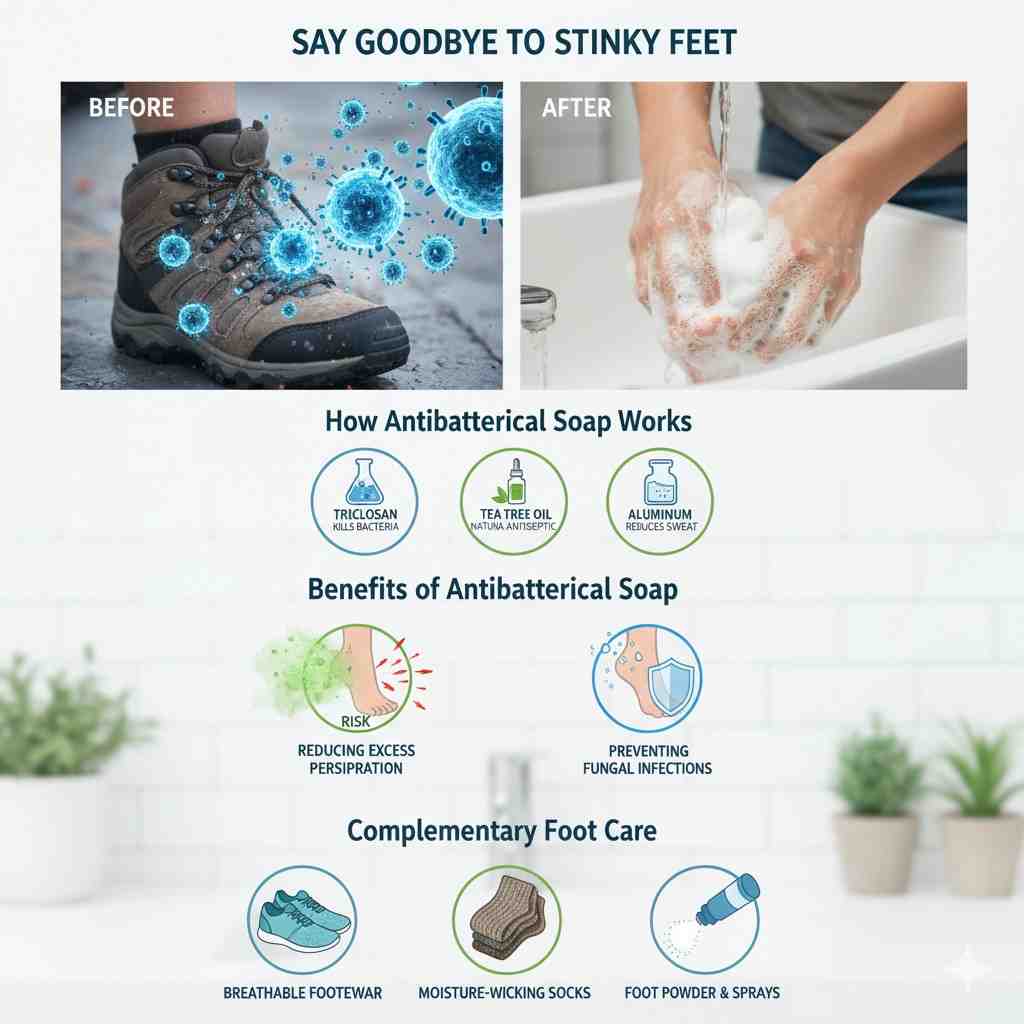
How Antibacterial Soap Works
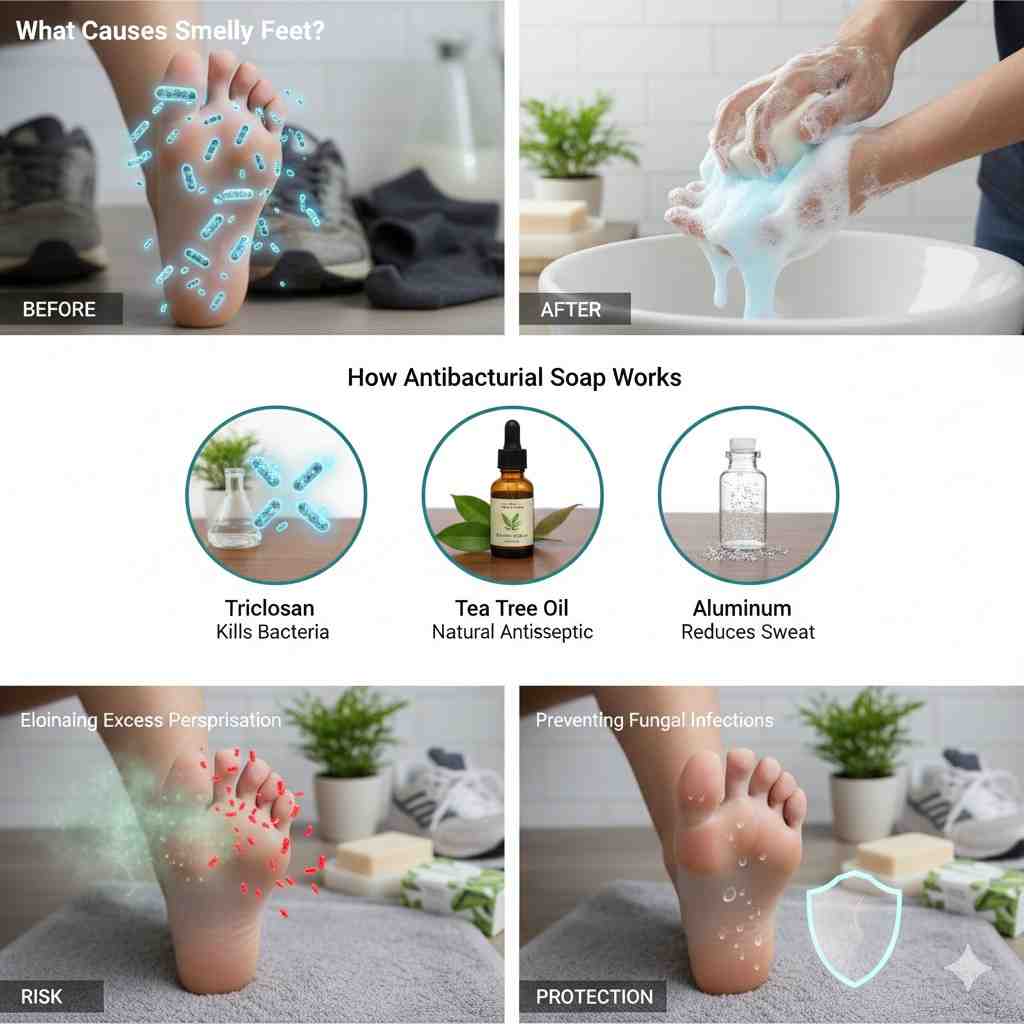
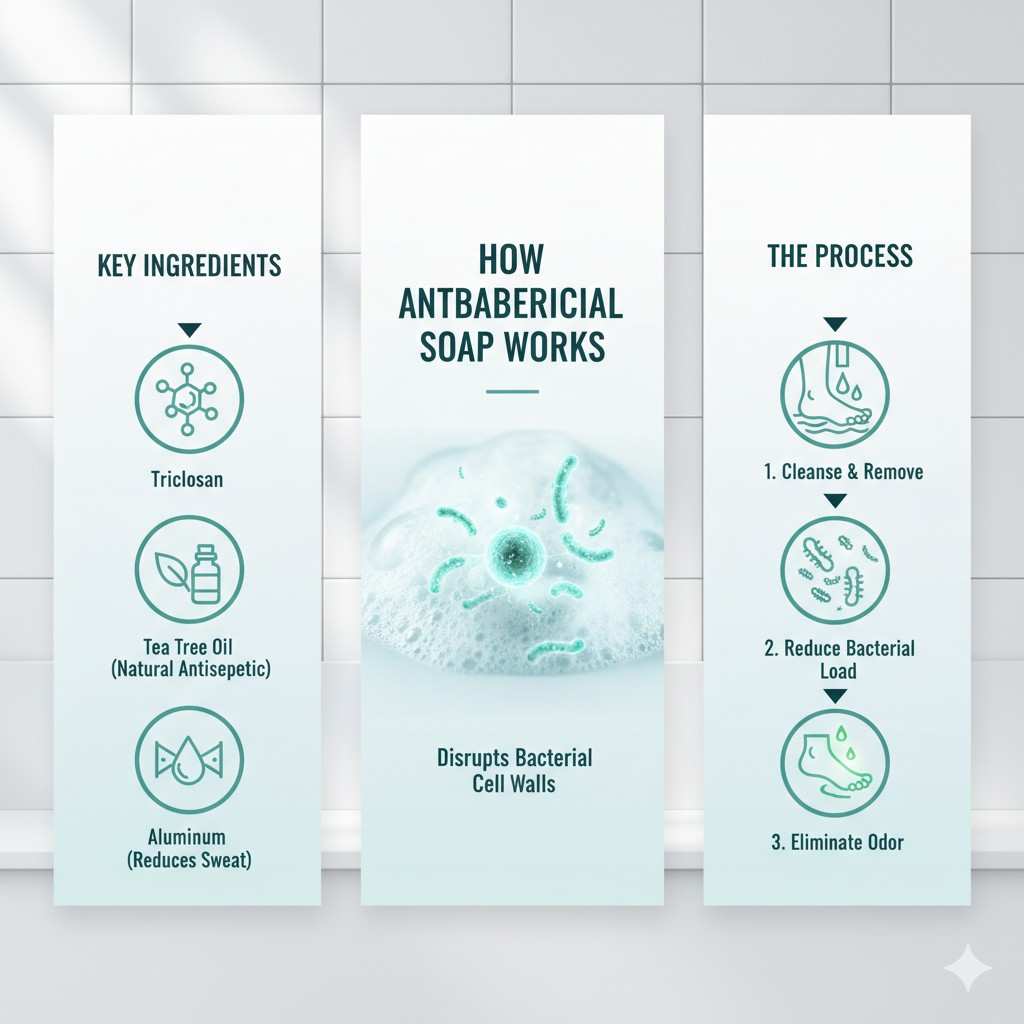
Antibacterial soaps for foot odor contains active ingredients that fight bacteria. Triclosan, triclocarban, and benzalkonium chloride are common. These break bacterial cell walls and stop growth.
When you wash your feet with antibacterial soap, it does three things:
- Removes dirt and sweat.
- Reduces bacteria.
- Lowers odor production.
Consistent use is important for lasting results.
Key Ingredients and Their Benefits
- Triclosan: Blocks bacteria enzymes and stops survival.
- Triclocarban: Reduces bacterial metabolism on the skin.
- Benzalkonium Chloride: Breaks cell membranes and kills bacteria.
- Essential Oils: Natural ingredients like tea tree and eucalyptus enhance antibacterial power.
Benefits of Using Antibacterial Soap for Foot Odor
Eliminating Odor-Causing Bacteria
The main benefit is eliminating odor at the root. Regular soap cleans but does not kill bacteria effectively. Antibacterial soaps for foot odor directly reduces odor-causing microbes. This leaves feet fresher for longer.
Reducing Excess Perspiration
Some antibacterial soaps contain antiperspirant agents. Aluminum compounds can temporarily block sweat ducts. Less sweat means fewer bacteria thrive. This dual action improves foot freshness.
Preventing Fungal Infections
Moist feet often attract fungi, leading to athlete’s foot. Itching, burning, and redness are common. Certain antibacterial soaps for foot odor also include antifungal ingredients. This gives extra protection for foot health.
Soothing and Protecting Skin
Some soaps combine aloe vera or oatmeal. These calm irritated skin and prevent dryness. People with sensitive feet find these especially helpful.
How to Use Antibacterial Soap for Foot Odor Effectively
Daily Washing Routine
Wash your feet every day with antibacterial soaps for foot odor. Lather all areas, including toes and soles. Use a soft brush to exfoliate dead skin. Rinse with warm water.
Never leave soap residue. Residue can trap moisture and irritate skin.
Drying Feet Properly
After washing, dry feet completely. Pay attention to the spaces between toes. Moisture between toes is bacteria’s favorite spot. Air drying for a few minutes adds extra protection.
Choosing the Right Soap
Not all soaps are equal. Always check the label. For sensitive skin, pick gentle formulas with natural oils. If you want reliable results, choose soaps made specifically as antibacterial soap for foot odor.
Avoid harsh chemicals that may cause irritation. Patch test before regular use.
Complementary Foot Care Habits
Wear Breathable Footwear
Shoes affect odor greatly. Choose materials like canvas, mesh, or leather. They allow air to circulate. Rotate your shoes often. This ensures each pair dries fully before the next use.
At home, walk barefoot when possible. This exposes feet to air and reduces bacterial growth.
Select the Right Socks
Moisture-wicking socks are best. Cotton holds sweat, so avoid it. Wool blends or synthetic sports fabrics keep feet drier. Change socks daily. If feet sweat heavily, change them twice daily.
Use Foot Powders or Sprays
Foot powders absorb moisture. They contain talc or cornstarch. Apply after drying your feet. Some powders also fight bacteria.
Antifungal sprays can be combined with antibacterial soap for foot odor. Together, they prevent both bacterial and fungal growth.
Maintain Good Hygiene Practices
Trim toenails regularly. Long nails collect dirt and bacteria. Exfoliate weekly to remove dead skin cells. Consider foot soaks with Epsom salt. They soothe, reduce inflammation, and add antiseptic benefits.
When to Seek Professional Help
Persistent Odor Despite Care
If odor does not improve after weeks of using antibacterial soap for foot odor, consult a doctor. There may be an underlying cause.
Accompanying Symptoms
Watch for redness, itching, or peeling skin. These can indicate infections. Seek medical help for blisters or swelling.
Underlying Medical Conditions
Conditions like diabetes or hyperhidrosis worsen foot odor. Diabetes can also cause nerve damage, increasing risk of unnoticed foot injuries. Always consult a podiatrist if odor persists.
Conclusion
Foot odor may feel embarrassing, but it is manageable. Sweat and bacteria are the main culprits. The most effective solution is antibacterial soap for foot odor. It attacks bacteria directly, reduces odor, and keeps feet fresh.
Combine this with proper drying, breathable shoes, clean socks, and powders. These steps create a complete foot-care routine. If odor continues, seek medical advice.
With consistent care, you can enjoy fresh, healthy feet every day.
Frequently Asked Questions (FAQ)
Q1: How often should I use antibacterial soaps for foot odor?
A1: Wash your feet with it daily for the best results.
Q2: Can antibacterial soaps for foot odor cure athlete’s foot?
A2: Some formulas include antifungal ingredients. However, athlete’s foot may require medical treatment.
Q3: Are there side effects of antibacterial soap for foot odor?
A3: Sensitive skin may feel dry. Choose soaps with aloe vera or moisturizing oils.
Q4: Can regular soap stop foot odor?
A4: Regular soap cleans but does not kill odor-causing bacteria as effectively as antibacterial soaps for foot odor.
Q5: What if odor persists even with antibacterial soaps for foot odor?
A5: See a podiatrist to check for medical issues.
Q6: Is tea tree oil in antibacterial soap for foot odor effective?
A6: Yes, tea tree oil has natural antibacterial and antifungal properties.
Q7: Should I wear socks to bed if I have foot odor?
A7: No, let your feet breathe at night to prevent moisture buildup.
Q8: Why is antibacterial soap for foot odor better than regular soap?
A8: Because it removes bacteria, reduces sweat breakdown, and prevents odor more effectively than standard soap.